敦煌壁画的故事
Introduction
The Dunhuang murals are among the most important treasures of ancient art in China. These paintings, created more than a thousand years ago, can still be seen today in the famous Mogao Caves near the historic city of Dunhuang.
The murals cover the walls and ceilings of hundreds of caves and represent one of the largest collections of Buddhist art in the world. They show religious stories, cultural exchanges, and everyday life along the ancient Silk Road.
引言
敦煌壁画是中国古代艺术最重要的文化遗产之一。这些绘画创作于一千多年前,如今仍然保存在著名的Mogao Caves中,该石窟位于中国历史悠久的城市Dunhuang附近。
这些壁画覆盖了数百个洞窟的墙壁和穹顶,是世界上规模最大的佛教艺术宝库之一。壁画描绘了宗教故事、文化交流以及古代丝绸之路上的生活场景。
Dunhuang and the Silk Road
For centuries, Dunhuang was an important gateway between China and Central Asia. It stood at a key location along the Silk Road, the famous trade network that connected East and West. Merchants, travelers, monks, and artists all passed through this desert oasis.
Because of these exchanges, Dunhuang became a cultural meeting point. Buddhism spread along the Silk Road, and monks began building temples and caves for meditation and worship. Artists were invited to decorate these caves with paintings that told stories from Buddhist teachings.
敦煌与丝绸之路
几个世纪以来,敦煌一直是连接中国与中亚的重要门户。它位于著名的丝绸之路交通要道上,这条贸易路线将东方与西方连接起来。商人、旅行者、僧侣和艺术家都会经过这片沙漠绿洲。
正因为如此,敦煌成为不同文化交汇的地方。佛教随着丝绸之路传播,僧人开始修建石窟用于修行与礼佛,同时邀请画师在洞窟墙壁上绘制佛教故事和宗教图像。
The Beauty of Dunhuang Murals
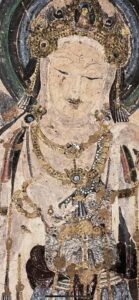
The Dunhuang murals are famous for their bright colors and graceful figures. Artists used natural mineral pigments to create reds, blues, and gold tones that remain vivid even after centuries.
One of the most recognizable images in these murals is the Flying Apsara, a celestial figure that appears to float through the sky with long flowing ribbons. These elegant figures represent freedom, beauty, and spiritual joy in Buddhist art.
敦煌壁画的艺术之美
敦煌壁画以鲜艳的色彩和优雅的人物形象而闻名。古代画师使用天然矿物颜料绘制红色、蓝色和金色,使壁画在数百年后依然色彩明亮。
其中最具代表性的形象之一是“飞天”。这些飞天人物身姿轻盈、衣带飘舞,仿佛在天空中飞翔。在佛教艺术中,它象征着自由、美与精神的喜悦。
Cultural Stories in the Murals
Beyond religion, the murals also record daily life along the Silk Road. Some scenes show travelers riding camels through the desert, musicians playing instruments, and merchants trading goods.
These paintings give historians valuable information about clothing, architecture, music, and social life in ancient times. In this way, the Dunhuang murals are not only religious art but also a visual history of cultural exchange.
壁画中的文化故事
除了宗教内容,敦煌壁画还记录了丝绸之路上的日常生活。有些画面描绘商队骑着骆驼穿越沙漠,有些描绘乐师演奏乐器,还有商人进行贸易的场景。
这些壁画为历史学家提供了关于古代服饰、建筑、音乐和社会生活的重要信息。因此,敦煌壁画不仅是宗教艺术,也是一部关于文化交流的视觉历史。
Dunhuang Murals in Modern Art
Even today, the beauty of Dunhuang murals continues to inspire artists and designers. The flowing lines, spiritual symbols, and rich colors appear in many forms of modern art, including painting, sculpture, and decorative crafts.
Artists around the world study Dunhuang imagery to understand how ancient cultures expressed spirituality through art. By reinterpreting these themes in contemporary materials, modern creators keep the spirit of Dunhuang alive.
敦煌壁画对现代艺术的影响
直到今天,敦煌壁画的艺术魅力仍然在影响世界各地的艺术家与设计师。壁画中的流动线条、宗教象征和丰富色彩被应用在绘画、雕塑以及各种装饰艺术中。
世界各地的艺术家研究敦煌图像,希望理解古代文化如何通过艺术表达精神世界。通过在现代材料与工艺中的再创作,敦煌艺术的精神得以延续。
Conclusion
The story of the Dunhuang murals is a story of culture, faith, and artistic creativity. Created along the Silk Road and preserved for centuries, these paintings continue to inspire people around the world.
As one of the greatest treasures of Chinese art, the Dunhuang murals remind us how powerful art can be in connecting cultures across time and distance.
结语
敦煌壁画的故事,是关于文化、信仰与艺术创造力的故事。这些在丝绸之路上诞生并保存千年的壁画,至今仍在启发着世界各地的人们。
作为中国艺术最伟大的文化遗产之一,敦煌壁画提醒我们:艺术拥有跨越时间与空间、连接不同文明的力量。