敦煌飞天的文化寓意
The Elegant Spirit of Dunhuang Art
Among the many images found in the murals of the Mogao Caves, one figure appears again and again—graceful, floating in the air, surrounded by flowing ribbons and music. These figures are known as Flying Apsaras, often called “Feitian” in Chinese.
Flying Apsaras have become one of the most iconic symbols of Dunhuang art. Their elegant movement, lightness, and spiritual beauty represent a unique fusion of religion, culture, and artistic imagination.
For centuries, these celestial dancers have inspired painters, sculptors, and designers across China and beyond.
Origins of the Flying Apsaras
The idea of Flying Apsaras originally came from ancient Indian mythology and Buddhist tradition. In Sanskrit texts, Apsaras are celestial musicians and dancers who live in heavenly realms.
As Buddhism traveled along the Silk Road into China, these spiritual figures were gradually transformed by local artistic styles. When they appeared in the murals of Dunhuang, they took on a new visual identity.
Chinese artists reimagined them with flowing silk ribbons, graceful body lines, and elegant gestures that reflected both Indian influence and Chinese aesthetics.
Over time, the Flying Apsaras became a symbol of harmony between cultures along the Silk Road.
Movement Without Wings
One of the most fascinating aspects of Flying Apsaras is that they do not have wings. Unlike angels in Western art, they appear to fly simply through movement.
Their long ribbons and scarves flow behind them like streams of wind, creating the illusion of flight. The curves of their bodies form graceful arcs that guide the viewer’s eye across the mural.
This sense of movement gives Dunhuang art a remarkable feeling of rhythm and life.
For many viewers, Flying Apsaras represent the idea of freedom, beauty, and spiritual elevation.
Music, Dance, and the Heavenly Realm
In many murals, Flying Apsaras carry musical instruments such as lutes, flutes, or small drums. They are often shown playing music while floating across the sky.
These images symbolize the joy and harmony of the Buddhist paradise. Music and dance become expressions of spiritual happiness rather than earthly entertainment.
For ancient pilgrims traveling the Silk Road, these images may have offered comfort and inspiration. They suggested that beyond the hardships of the desert journey, a peaceful and beautiful world awaited.
A Symbol of Cultural Exchange
The murals of Dunhuang were created over many centuries by artists from different regions and cultures. As a result, the style of Flying Apsaras evolved continuously.
Some figures appear slender and elegant, reflecting Chinese painting traditions. Others show stronger influences from Central Asian or Indian art.
This blending of styles makes Flying Apsaras an important symbol of cultural exchange along the Silk Road.
They remind us that art often grows richer when different traditions meet and inspire each other.
Inspiration for Modern Artists
Today, Flying Apsaras continue to inspire modern artists and designers. Their flowing lines and graceful forms appear in paintings, sculptures, fashion, and even contemporary digital art.
For many creators, these celestial figures represent the timeless beauty of Dunhuang culture.
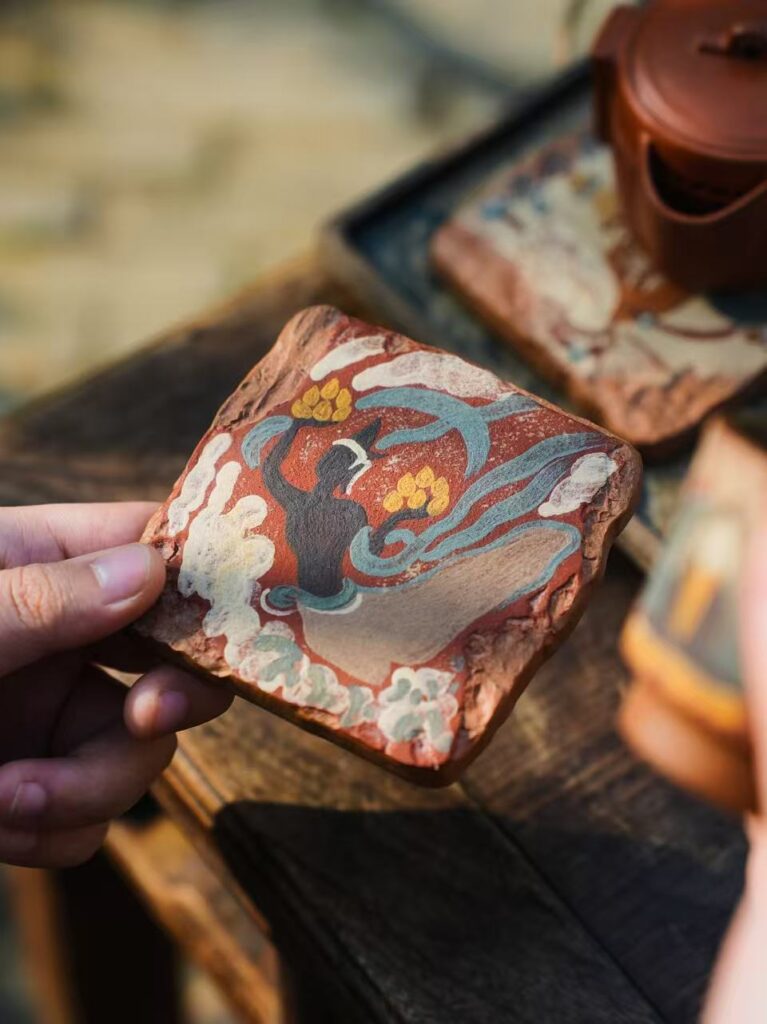
When combined with traditional crafts—such as pottery from Yixing—the imagery of Flying Apsaras creates a fascinating dialogue between ancient mural art and handmade ceramic traditions.
Through these reinterpretations, the spirit of Dunhuang continues to live on in new artistic forms.
敦煌飞天的文化寓意
在敦煌莫高窟壁画中,有一种形象最令人难忘——她们身姿轻盈,衣带飘扬,在空中自由飞舞。这些形象被称为“飞天”。
飞天是敦煌艺术中最具代表性的符号之一,也是中国传统美学中关于“灵动与自由”的经典表达。
飞天的起源
飞天的形象最早来源于古印度神话和佛教文化。在梵文经典中,天界有一种擅长音乐和舞蹈的神女,被称为 Apsaras。
随着佛教沿着丝绸之路传入中国,这种形象逐渐被中国艺术家重新创造。
在敦煌壁画中,飞天不再只是神话人物,而是融合了印度、中亚与中国艺术风格的一种独特形象。
无翼而飞的艺术想象
与西方宗教艺术中的天使不同,敦煌飞天并没有翅膀。她们通过飘动的衣带和流畅的姿态表现飞行。
长长的飘带在空中盘旋,如同风的轨迹,使整个画面充满节奏感与动感。
这种独特的表现方式,体现了中国艺术中对于“气韵”和“流动之美”的追求。
音乐与天堂的象征
在许多壁画中,飞天手持琵琶、箜篌或笛子,一边飞舞一边演奏乐曲。
这些形象象征着佛教世界中的祥和与欢乐,也表达了古人对理想世界的想象。
对于古代丝绸之路上的旅人来说,这些壁画不仅是宗教艺术,也是一种精神慰藉。
丝绸之路的文化符号
敦煌位于丝绸之路的重要节点,因此飞天形象也体现了多种文化的交流与融合。
在不同历史时期,飞天的造型不断变化,有的飘逸纤细,有的气势宏大,反映出不同地域艺术的影响。
正因为这种多元融合,敦煌飞天成为丝绸之路文化最具代表性的符号之一。
当代艺术的灵感来源
直到今天,敦煌飞天仍然不断启发新的艺术创作。
无论是在绘画、雕塑、服装设计,还是在陶艺创作中,飞天的飘带、姿态和意境都被不断重新演绎。
当敦煌飞天的艺术元素与宜兴紫砂这样的传统工艺结合时,就形成了一种跨越时间与文化的艺术对话。
这也让古老的敦煌艺术在现代生活中继续焕发新的生命力。
What it is everybody? Had a quick look around vip77login, and it seems like they definitely cater to a more high-roller scene. Bonuses look tasty though! Check it, if you dare: vip77login
Just signed up on zk777game and the welcome bonus was pretty sweet. Games seem fair, haven’t won big yet, but I’m having some fun. Give it a try and let me know what you think. zk777game